
Pat Kezer
Graduate Student Researcher
Body
Heron Group Member (University of Michigan)
Email: pkezer@umich.edu
Affiliations


Heron Group Member (University of Michigan)
Email: pkezer@umich.edu

Rost Group Member (Virgina Tech)
Email: geraldb@vt.edu

Rost Group Member (Virgina Tech)
Email: jpbarber38@vt.edu


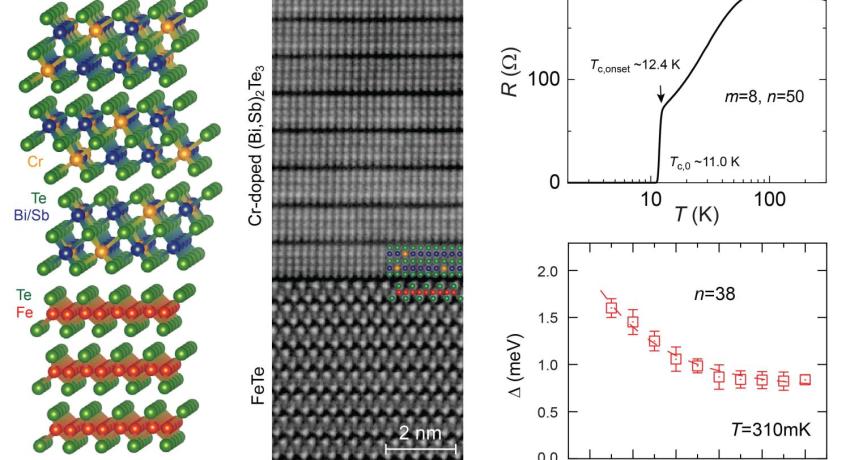
UNIVERSITY PARK, Pa. — A new fusion of materials, each with special electrical properties, has all the components required for a unique type of superconductivity that could provide the basis for more robust quantum computing. The new combination of materials, created by a team led by researchers at Penn State, could also provide a platform to explore physical behaviors similar to those of mysterious, theoretical particles known as chiral Majoranas, which could be another promising component for quantum computing.

Crespi Group Member
Email: pel1@psu.edu

Crespi Group Member
Email: mtm6098@psu.edu